Cost Analysis of Owning vs Renting Track Welding Machines
Understanding Track Welding Machines
Overview of Track Welding Technology
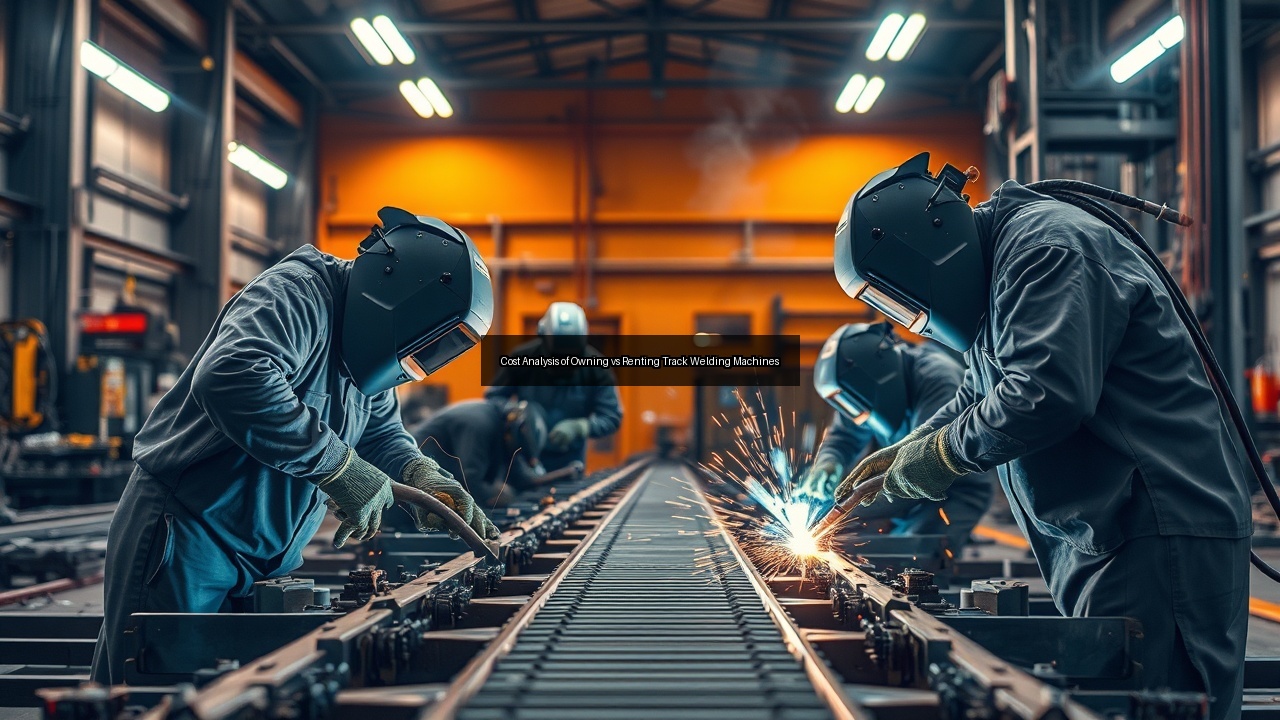
Track welding technology plays a pivotal role in the fabrication and construction industries. It provides a precise and efficient method for joining metals, particularly in large-scale projects. This technology involves the use of a track welder, a specialized machine that ensures consistency and accuracy during the welding process. Track welding machines utilize a guided system to move the welding head along the workpiece, allowing for continuous welds without the need for manual adjustments. The automation of this process not only increases productivity but also reduces the chance of human error, making track welding a preferred choice for many industrial applications.
Key Components of Track Welding Machines
Understanding the components of track welding machines is essential for evaluating their effectiveness. At the heart of these machines lies the oscillator, which controls the movement of the welding head. This component allows for oscillation patterns, ensuring that the weld penetrates deeply and uniformly. The connecting rod connects the oscillator to the welding torch, facilitating smooth movement. Additionally, track welding machines feature a control panel that enables operators to adjust settings for voltage, speed, and weld type, ensuring optimal performance. Other key components include electrodes, which are crucial for creating the weld pool, and the wire feed system, which delivers the filler material to the weld joint.
Types of Track Welding Equipment
Various types of track welding equipment cater to different welding needs. The most common types include automatic track welders, which operate with minimal human intervention, and semi-automatic machines that require some operator input. Automatic track welders excel in high-volume production environments, while semi-automatic units offer flexibility for smaller, custom projects. Additionally, portable track welders have gained popularity due to their ease of transport and setup, making them ideal for on-site work. Depending on the specific requirements, businesses can choose from different models that offer varying levels of sophistication and capabilities, ensuring they find the right fit for their welding projects.
Cost Considerations
Initial Purchase Costs of Track Welders
The initial purchase costs of track welders can vary significantly based on the model and features. Basic models may start at a lower price point, but advanced machines with greater capabilities—such as programmable features and enhanced oscillation control—can reach premium prices. Businesses must also consider the costs associated with purchasing additional accessories, such as specialized electrodes or ceramic liners, which can further increase the total investment. Understanding the total cost of ownership is vital, as companies should evaluate their long-term welding needs against the initial outlay. This comprehensive assessment helps businesses determine whether buying a track welder aligns with their financial strategies and operational demands.
Ongoing Operational Costs
Ongoing operational costs represent a significant aspect of owning track welding machines. These costs encompass consumables such as welding wire, electrodes, and shielding gases that are essential for the welding process. Additionally, energy consumption contributes to the overall expenses, particularly in high-volume applications where machines operate continuously. Businesses should also account for labor costs, as skilled operators are necessary to run these machines effectively. Evaluating these ongoing expenses helps organizations plan budgets accurately, ensuring they have the financial resources to maintain efficient operations while meeting project demands.
Maintenance Expenses and Downtime
Maintenance expenses play a crucial role in the overall cost analysis of track welding machines. Regular maintenance not only prolongs the lifespan of the equipment but also ensures optimal performance. Businesses must invest in routine checks and servicing, which may include calibrating the oscillator and replacing worn components. Downtime due to equipment failure can lead to significant financial losses, making preventive maintenance essential. Implementing a proactive maintenance schedule mitigates the risks of unexpected breakdowns and enhances the overall productivity of welding operations. Companies that prioritize maintenance can maximize their return on investment and maintain a competitive edge in the market.
Owning vs. Renting: A Detailed Comparison
Advantages of Owning Track Welding Machines
Owning track welding machines offers several distinct advantages. First, businesses gain full control over their equipment, allowing them to customize setups for specific projects. This flexibility enhances efficiency and ensures that welding processes align with production timelines. Additionally, owning equipment can lead to cost savings over time, particularly for companies that engage in frequent or large-scale welding projects. The upfront investment may seem substantial, but the long-term benefits, such as reduced rental fees and consistent availability, often justify the expense. Moreover, ownership allows for better management of maintenance schedules, further enhancing productivity and minimizing downtime.
Benefits of Renting Track Welders
Renting track welders can be an attractive option for businesses with fluctuating project demands. Rental agreements provide access to the latest models without the heavy upfront costs associated with purchasing equipment. Companies can choose machines tailored to specific projects, ensuring they have the right tools for the job. Renting also eliminates the burdens of maintenance and storage, as rental companies typically handle these responsibilities. For businesses that may only need a track welder for a short period, renting offers a cost-effective solution that allows them to allocate resources more efficiently. This flexibility makes renting a viable option for many organizations in the welding industry.
Return on Investment Analysis
Analyzing the return on investment (ROI) is critical when deciding between owning and renting track welding machines. For businesses with consistent welding needs, ownership may yield a higher ROI due to reduced operational costs over time. Conversely, organizations with sporadic or project-based requirements might find renting more advantageous, as it avoids the hefty initial investment and ongoing maintenance expenses. To conduct a thorough ROI analysis, businesses should assess not only the financial implications but also consider factors like project timelines, equipment availability, and potential downtime. This comprehensive approach ensures that companies make informed decisions that align with their long-term business goals.
Making the Right Choice for Your Welding Needs
Factors to Consider When Choosing Between Owning and Renting
Several factors influence the decision to own or rent track welding machines. Project frequency stands as a primary consideration; businesses with high-volume needs often benefit from ownership, while those with irregular demand may prefer renting. Budget constraints also play a critical role, as companies must evaluate their financial capabilities and operational priorities. Additionally, the availability of skilled operators can impact this decision; owning machines requires trained personnel to operate them effectively. Understanding the specific requirements of each project and the overall business strategy will guide organizations in making the right choice that aligns with their welding needs.
Case Studies: Businesses That Succeeded with Track Welding
Examining case studies of businesses that have successfully implemented track welding technology provides valuable insights. For instance, a construction firm that opted to own a state-of-the-art track welding machine significantly improved its productivity and reduced project timelines. By customizing their welding processes to suit various projects, they enhanced quality and consistency, leading to increased client satisfaction. Conversely, a manufacturing company that relied on renting track welders for short-term projects successfully minimized costs and maintained flexibility. Their approach allowed them to adapt quickly to market demands without the burden of ownership. Such examples illustrate the potential benefits of both ownership and renting in the context of track welding.
Future Trends in Track Welding Technology
Future trends in track welding technology indicate exciting advancements on the horizon. Innovations such as smart welding machines equipped with artificial intelligence aim to enhance efficiency and accuracy. These machines can analyze welding conditions in real time, adjusting parameters to optimize the welding process. Furthermore, the integration of automation and robotics is transforming the industry, allowing for even greater precision and reduced labor costs. As manufacturers continue to develop more advanced track welding equipment, businesses must stay informed about these trends. Adopting cutting-edge technology can provide competitive advantages and ensure that organizations remain at the forefront of the welding industry.